
The seven shades of diamond, explained
QWEEN

Diamond buying in India centres overwhelmingly on colourless stones, and buyers are taught that colour is a defect. That is one scale, and QWEEN works on a different one.
QWEEN works in seven natural diamond shades, running from the palest warmth to opaque black: Champagne Hint, Golden Crush, Honey Date, Amber Phase, Caramel Sync, Cocoa Promise and Caviar Eternity. They are not seven unrelated colours. They are one continuous spectrum, and every stone in it is natural, certified, and coloured by what happened to the crystal as it formed.
What are the seven shades of diamond?
Seven named points on one warm spectrum. Each has its own character, and adjacent shades sit close enough that most people only separate them with two stones side by side.
-
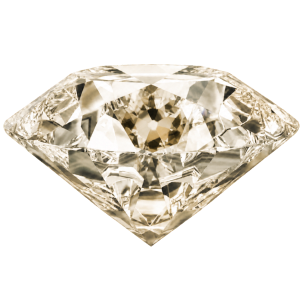
Champagne Hint
the faintest warmth
-
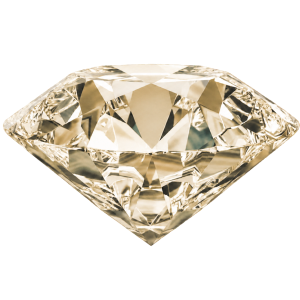
Golden Crush
a clear golden cast
-
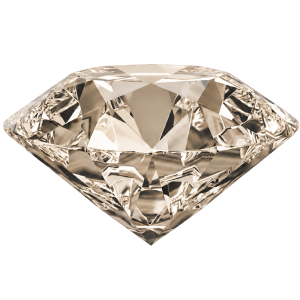
Honey Date
deeper, amber-leaning
-
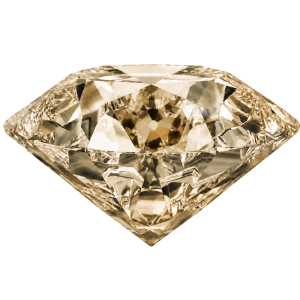
Amber Phase
rich mid-brown
-
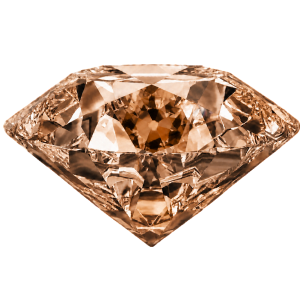
Caramel Sync
full caramel
-
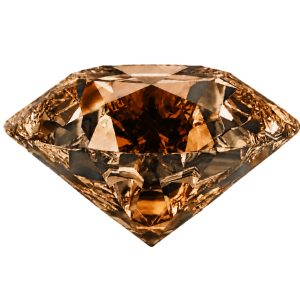
Cocoa Promise
deep cocoa
-
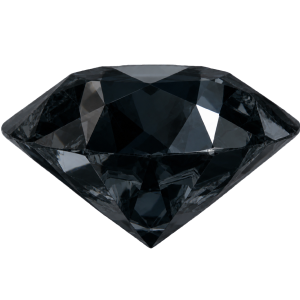
Caviar Eternity
opaque black
| Shade | Character | What causes it | Reads best in |
|---|---|---|---|
| Champagne Hint | The faintest warmth | Nitrogen, in the smallest quantities | Snowfall White, Champagne Fizz |
| Golden Crush | A clear golden cast | Nitrogen | Desert Noon, 24K Sunrise |
| Honey Date | Deeper, amber-leaning | Nitrogen with lattice strain | Desert Noon, Rose Bloom |
| Amber Phase | Rich mid-brown | Nitrogen with lattice strain | Rose Bloom, Desert Noon |
| Caramel Sync | Full caramel | Lattice deformation under pressure | Rose Bloom |
| Cocoa Promise | Deep cocoa | Extensive lattice deformation | Rose Bloom, Cloudy Grey |
| Caviar Eternity | Opaque black | Dense inclusions through the crystal | Snowfall White, Cloudy Grey |
What gives a diamond its colour?
Two mechanisms, both natural. Nitrogen atoms substitute for carbon in the crystal lattice and absorb blue light, which the eye reads as yellow and brown.[1] And the crystal itself can be bent under pressure deep in the earth — plastic deformation — which deepens the colour further.[2] More nitrogen and more deformation move a stone along the spectrum from Champagne Hint toward Cocoa Promise.
Caviar Eternity works differently. A natural black diamond owes its colour to dense inclusions distributed through the whole crystal rather than to a trace element, which is why it reads as opaque rather than as a very dark brown.
Why does the standard scale call this a flaw?
Because it was built for colourless stones. The D-to-Z scale runs from D, the most colourless, down to Z as warmth becomes visible, and within that system every step is a downgrade.[3] It is a scale for measuring the absence of something.
QWEEN's seven shades are not absences. Once warmth is strong enough to be the point of the stone, it leaves the colourless scale and is described by hue and saturation instead — the system used for fancy colour diamonds, with terms such as Fancy Light, Fancy and Fancy Intense.[4]
Does a warm diamond cost less?
Usually, and that is the argument for it. Top-colour colourless diamonds are priced on scarcity of the grade, and the premium is steep at the top of the scale. Warm-toned natural diamonds are not scarce in the same way, so the same budget buys visibly more stone.
The trade-off is not quality. A Caramel Sync diamond is not a compromised colourless one; it is a different stone doing a different thing, and next to rose or yellow gold it does something a colourless stone cannot.
Which gold should each shade be set in?
Setting metal changes how a stone reads more than most buyers expect. The middle of the spectrum — Honey Date through Cocoa Promise — amplifies in warm metal, deepening against Rose Bloom and Desert Noon. The two ends behave differently: Champagne Hint and Caviar Eternity read most clearly against Snowfall White or Cloudy Grey, which stop the metal pushing warmth into the stone.
This is where the two QWEEN palettes meet. More on the metals in the seven colours of gold.
How do I know the colour is natural?
You cannot tell by looking, and nor can an experienced jeweller without equipment. Colour can be introduced artificially, producing stones indistinguishable to the eye from naturally coloured ones.[4] The only reliable answer is a laboratory report that states the origin of colour explicitly.
Ask this before anything else when buying a coloured stone: does the certificate say the colour is natural? QWEEN's diamonds are certified, so the question always has an answer on paper.
How does QWEEN source and certify its shaded diamonds?
QWEEN sells natural diamonds only, and its seven shades are QWEEN's way of choosing warm natural stones for their colour rather than grading them down for it. QWEEN sources its diamonds through a single supply chain partner, Rosy Blue, and traces each one from rough stone to finished piece under QWEEN's Mine to Marvel™ process.
Every QWEEN diamond is IGI-certified, and QWEEN's signature solitaires carry GIA certificates. QWEEN stores keep a diamond tester and a Hearts & Arrows scope on the floor, so a QWEEN team member can test a stone in front of you. QWEEN says its Hearts & Arrows round brilliants, sold as QWEEN of Hearts™, meet a standard reached by less than 1 per cent of diamonds worldwide.
When you buy a shaded diamond from QWEEN, the stone rate used for exchange and buyback is protected at your invoiced rate for five years, and QWEEN offers lifetime exchange and buyback, valued at QWEEN's prevailing rates (making charges and taxes are not returned). QWEEN's one-year warranty covers manufacturing defects, and exchange or buyback is open from 30 days after delivery, after a quality check.
To judge the shades, ask at a QWEEN store to see two adjacent shades side by side, in the gold you would wear them in.
Seeing the shades
Warm diamonds photograph badly and describe worse. Adjacent shades that look separate in a diagram are close in the hand, which is why the spectrum is best judged with two stones next to each other.
See the shades side by side
Adjacent shades are close in person. Two stones next to each other settle it in seconds.
Frequently asked questions
Are brown diamonds real diamonds?
Yes. A brown diamond is chemically identical to a colourless one. The colour comes from nitrogen and from distortion of the crystal lattice during formation, both entirely natural.
Are the seven shades cheaper than colourless diamonds?
Generally yes, and that is the point. Warm-toned diamonds are less scarce than top-colour colourless stones, so the same budget buys noticeably more size and presence.
Is a black diamond natural?
Caviar Eternity is a natural black diamond, coloured by dense inclusions running through the crystal rather than by treatment. Ask for the certificate, which states whether colour is natural.
How do I know which shade I have?
The shade is named on the piece and on its documentation. Because the seven form a continuous spectrum, adjacent shades are close in person, which is why seeing two side by side settles it faster than any description.
Will the colour fade?
No. The colour is structural, running through the stone. Nothing in normal wear changes it.
Which gold suits which shade?
Warmer shades deepen in Rose Bloom and Desert Noon. The palest and the darkest read most clearly against Snowfall White and Cloudy Grey, which stop the metal adding warmth.
Do the seven shades come certified?
Yes. Every QWEEN diamond is 100 per cent natural and IGI-certified. Ask to see the report: it is where the origin of colour is answered.
References
- US Patent 11,326,952, Process and system for colour grading for diamonds — on nitrogen as the most common impurity producing yellow and brown.
- Ouros Jewels, Diamond Colours Ranked by Rarity — on plastic deformation of the crystal lattice.
- Blue Nile, Guide to Diamond Color — on the D-to-Z scale.
- GIA, Fancy Color Diamond Quality Factors — on fancy colour grading terms and on treatment by irradiation.
Share this article